
Commercial Shoot Locations Tokyo: A Producer's Venue Guide
Rooftops, modern apartments, machiya interiors, retail and landmark backdrops — a sourcing shortlist for brand and ad-agency producers, with permit complexity and booking timelines for each
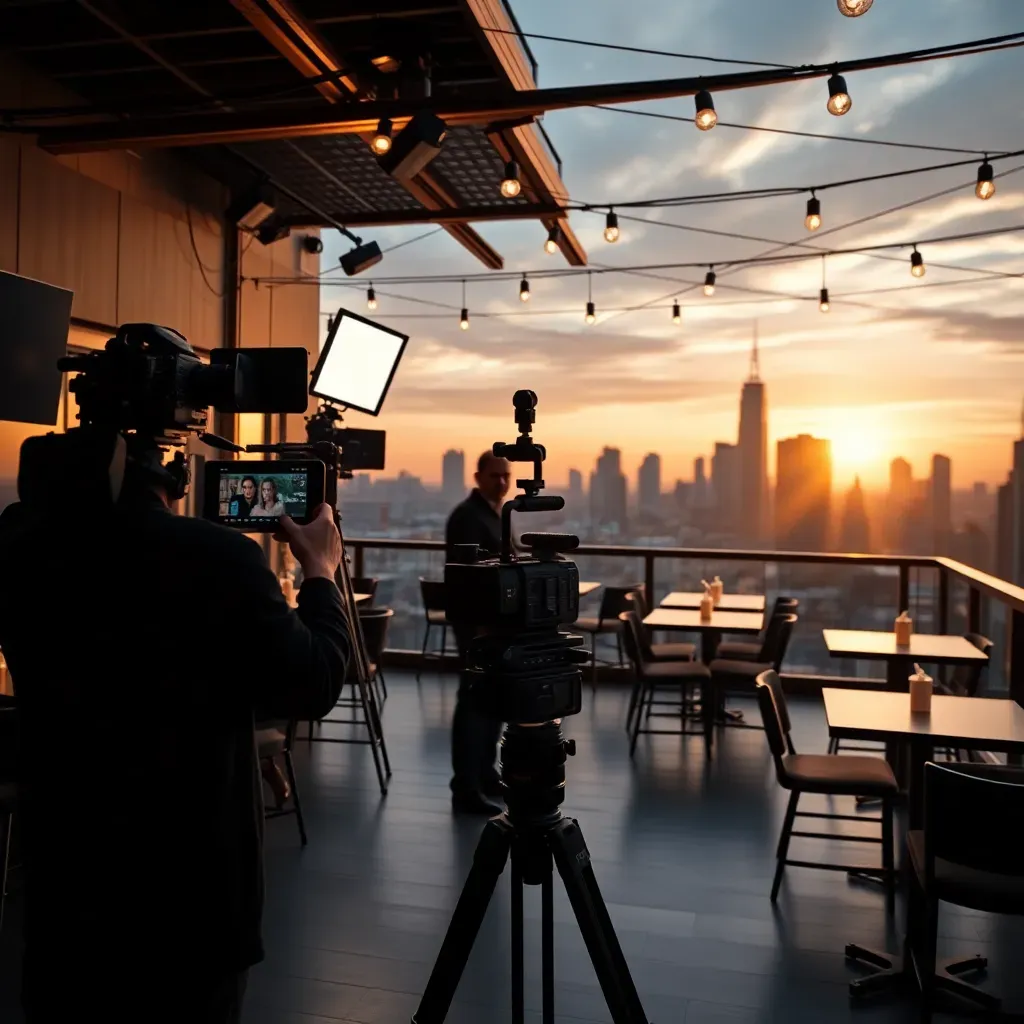
Commercial shoot locations Tokyo cover a wider range than any single mood board can hold, and that breadth is exactly why brand and ad-agency producers keep coming back. For a beauty film, a luxury-auto spot, a fashion editorial, or a food-and-drink campaign, the city pairs neon-soaked modernism with raw industrial lofts, chic rooftops, and surviving low-rise heritage inside a small radius. This guide is a sourcing shortlist, not a tourism list. We group the venues producers ask for most into clear categories — ロケ地 東京 (Tokyo filming locations) that actually accept commercial filming — and for each we set out what it suits visually, how hard the permit is, and roughly how fast you can book. Our team scouts and clears these spaces every week, so the timelines here reflect real bookings rather than wish lists.
13 venues categories shortlisted · 6 categories location registers · 24h–1 month typical booking lead time
Why Tokyo for Commercial Shoots
Visual Range, Crew Depth, and the Brand Look
Tokyo gives brand producers something rare: many distinct visual registers within a short transfer, backed by a deep commercial crew base and location agencies who clear spaces fast. The commercial venues a producer can pull from in a single day cover luxury, fashion, lifestyle, and modern brand looks.
- ●Luxury, fashion, beauty, lifestyle, food, and modern-brand registers all sit within one ride across the city
- ●A deep commercial crew base — DOPs, gaffers, stylists, food and product specialists — books on tight ad-agency timelines
- ●Location agencies hold private interiors, rooftops, and lofts that clear far faster than ward-level (区) permits
- ●Studios in the western belt cover product, tabletop, and beauty work when a controlled set beats a real venue
The Range Brands Come For
A single Tokyo commercial can move from a glass-and-steel penthouse to an industrial loft to a vintage retail counter without a long transfer. That density is the practical reason agencies base brand work here. Luxury auto and watch campaigns lean on the Roppongi and Marunouchi skyline and clean modern geometry. Beauty and fragrance films pull on soft modern interiors and surviving machiya townhouses for warmth. Fashion editorial works the industrial lofts of the eastern bay-side wards and the back streets of Daikanyama, while food and drink campaigns favour izakaya interiors and shotengai market settings. Because the registers sit close together, a two-day shoot can carry three or four looks, which keeps brand budgets efficient and travel days low.
Crew, Agencies, and Booking Speed
Brand work runs on tighter timelines than features, and Tokyo is built for it. The commercial crew base — DOPs, gaffers, stylists, food stylists, product and tabletop specialists — is used to one-to-three-week turnarounds, or even days when the agency has standing relationships. The location market is just as quick: private location agencies hold a deep catalogue of interiors, rooftops, and lofts that they can clear on owner consent alone, well ahead of any ward-level (区) permit. When a controlled environment beats a real venue — pack shots, tabletop, beauty macro — the western studio belt around Chofu and the Tama corridor covers it. We map a shoot across all three: real venues, agency-held spaces, and stages.
Commercial Shoot Locations Tokyo: Rooftops & Landmark Backdrops
Skyline Views and Iconic Exteriors
Elevated and landmark backdrops give brand films their establishing power. They also carry the most permit weight in the city, so we flag the complexity and lead time on each before you fall in love with a frame.
- ●Chic rooftops with skyline views — Tokyo Tower, Skytree, or the Shinjuku and Shibuya towers in frame
- ●Shibuya Crossing and landmark exteriors — the scramble, Tokyo Tower, and the Roppongi towers as anchors
- ●Tokyo Bay, Odaiba, and Rainbow Bridge backdrops for travel, auto, and lifestyle motion
- ●Marunouchi and the Roppongi Hills base for modern, tech, and finance brand looks
Rooftops with Skyline Views
Private rooftops and rooftop bars across Shibuya-ku, Minato-ku, and Shinjuku-ku deliver the panoramic skyline shot brands want for fragrance, fashion, and aspirational lifestyle work. An east or south-facing terrace can frame Tokyo Tower, the Skytree, or a sea of towers in one move. Permit complexity is Medium: the rooftop itself clears on private owner or venue consent, but rigging, generators, or a visible crane can pull in building management and, for anything overhanging the street, a ward notification. Booking timeline runs roughly one week for an agency-held terrace, longer if you need a specific landmark in frame at a set time of day.
Landmark Exteriors and Shibuya Crossing
Shibuya Crossing, Tokyo Tower, the Asakusa Senso-ji approach, and the Tokyo Bay waterfront are the city's signature exteriors for luxury auto, travel, and hero brand beats. Permit complexity is Complex: these are public-space shoots run through the relevant ward-level (区) office — Shibuya-ku for the scramble, Minato-ku for Tokyo Tower, Taito-ku for Asakusa — and anything affecting traffic or needing a security perimeter also routes through the Tokyo Metropolitan Police Department. Booking timeline is one month or more — landmark and traffic-impact shoots need the longest lead times in Tokyo, and some axes close entirely during major events or the Tokyo Marathon. We cover the full permit mechanics in our /blog/filming-permit-city-guide/, and these are the backdrops where early filing matters most.
Odaiba, Marunouchi, and the Modern Skyline
For tech, finance, and forward-looking brand stories, Odaiba and Tokyo Bay give the modern skyline-and-water register the historic centre cannot, with Rainbow Bridge and the waterfront promenade as clean, scalable backdrops. Marunouchi and the Roppongi Hills base add the same glass-and-steel geometry in the corporate core. Permit complexity is Medium: the Odaiba waterfront was built with public-event use in mind and often clears more predictably than the central landmarks under Minato-ku and the wider waterfront authority, while Marunouchi runs through Chiyoda-ku. Booking timeline is around two to three weeks. It suits modern automotive, consumer tech, and corporate brand films that need scale and clean lines.
Commercial Shoot Locations Tokyo: Period & Residential Interiors
Machiya Townhouses, Traditional Interiors, and Modern Apartments
Interiors are where Tokyo quietly wins commercial work. Most clear on owner consent through a location agency, so they are faster and easier to book than the city's famous exteriors — and they carry the looks beauty, fashion, and luxury brands ask for.
- ●Machiya townhouses and traditional interiors — tatami, shoji screens, timber, and engawa verandas
- ●Ryotei and traditional ryokan-style rooms for high-luxury and heritage registers
- ●Modern apartments and penthouses for clean lifestyle and tech brand looks
- ●Traditional teahouses and Japanese gardens for fragrance and fashion editorial
Machiya Townhouses and Traditional Interiors
The machiya townhouse — tatami flooring, shoji screens, timber framing, and an engawa veranda onto a small garden — is among the most-requested heritage interiors in Tokyo. Concentrated in the surviving low-rise quarters of Yanaka, Nezu, and Kagurazaka, these spaces suit beauty, fragrance, luxury fashion, and premium lifestyle films that need warmth and tradition without going to a temple. Permit complexity is Easy: a location agency clears the house on owner consent, and no ward permit is needed unless your crew, trucks, or lighting spill onto the street. Booking timeline is fast — often 24 hours to one week for an agency-held property, which makes these the workhorse venues for tight brand schedules.
Ryotei, Ryokan Rooms, and Grand Traditional Interiors
For the top luxury register, traditional ryotei restaurants and ryokan-style rooms offer mansion-scale tatami salons, inner courtyards, and garden views under single ownership. They carry watch, jewellery, kimono, and high-end fragrance campaigns that need a sense of private grandeur. Permit complexity is Easy to Medium: the venue itself clears on owner agreement, but the finest houses run a careful approval and may cap crew size, restrict catering, or require a recce before they confirm. Booking timeline is roughly one to two weeks, longer for the most exclusive addresses. We hold relationships with the agencies and owners who actually accept commercial filming, which matters since many traditional houses do not.
Modern Apartments and Penthouses
When a brand wants contemporary rather than classical, modern apartments and penthouses across Minato-ku, Shibuya-ku, and the redeveloped bay-side districts give clean lines, open-plan light, and skyline views from the upper floors. These suit consumer tech, modern lifestyle, wellness, and contemporary fashion. Permit complexity is Easy: owner or agency consent covers the interior, and the only escalation is rigging that affects the building or shooting visibly toward the street. Booking timeline is around 24 hours to one week. For residential work in particular, keeping crew and equipment lean is the key to fast access — we detail that approach in the logistics section below.
Industrial, Loft, Retail & Hospitality Venues
Lofts, Showrooms, Izakaya, and Vintage Markets
Beyond the heritage registers, Tokyo carries the raw and the curated: industrial lofts for fashion, retail and showroom interiors for product, and characterful hospitality and market settings for food, drink, and lifestyle.
- ●Industrial lofts and warehouses — Koto, Edogawa, and the eastern bay-side wards, fashion and editorial
- ●Retail and showroom interiors for product, beauty, and brand campaigns
- ●Izakaya, restaurants, and bars — chic, classic, and niche food-and-drink looks
- ●Vintage markets — Ameyoko and the Yanaka shotengai — for lifestyle and editorial
Industrial Lofts and Warehouse Spaces
Industrial lofts and converted warehouses — concentrated in the eastern bay-side wards of Koto and Edogawa, and around the Tama river belt — give the raw concrete, exposed steel, and timber-frame register that fashion editorial and contemporary brand films favour. They also offer high ceilings and open floors that take a full lighting package without a stage rebuild. Permit complexity is Easy to Medium: most clear on owner or agency consent, with the only escalation being street-side trucks, generators, or large crews that need a ward notification. Booking timeline is roughly one week, which makes lofts a reliable fallback when a studio is unavailable or the brief wants real texture over a built set.
Retail, Showroom, and Hospitality Interiors
Retail interiors, brand showrooms, and characterful izakaya, restaurants, and bars carry product, beauty, lifestyle, and food-and-drink work. Chic, classic, and niche venues across Ginza, Daikanyama, Nakameguro, and the Golden Gai give everything from polished boutique counters to lantern-lit standing bars. Permit complexity is Easy when shot inside on owner consent; it rises to Medium only if you film toward the street or need exclusive use during trading hours. Booking timeline runs one week to one month, since the best venues guard their reputation and trading and may only confirm a closure date weeks out. Do confirm acceptance early — many high-end hospitality venues decline commercial filming outright, so we pre-vet for it.
Vintage Markets and Lifestyle Settings
For lifestyle, vintage, and editorial texture, the Ameyoko market under the Ueno tracks, the Yanaka Ginza shotengai, and the city's covered arcades give layered, characterful backdrops full of period objects and natural patina. These suit homeware, fashion, food, and lifestyle brands chasing an authentic, lived-in register rather than a built look. Permit complexity is Medium: individual market stalls and units clear with the vendor and the shotengai association, but the wider market is a semi-public space with its own filming rules and trading hours, and the surrounding street sits under the ward. Booking timeline is around one to two weeks. Early-morning windows before the market opens to the public are usually the working answer for clean, uncrowded frames.
How to Source Non-Listed Venues
The Scouting Workflow Behind a Custom Location
No shortlist covers every brief. When the campaign needs a venue that is not on any catalogue — a specific reference frame, an exclusive address, or a look no agency holds — this is the scouting workflow we run to find and clear it.
- ●Reference-led scouting — we match real venues to a mood board or reference frame
- ●Off-market sourcing through owner, agency, and concierge relationships
- ●Permit-aware shortlisting so every option arrives with a realistic lead time
- ●Recce, tech scout, and option agreements before the venue is locked
From Reference Frame to Real Venue
Most custom location briefs start with a reference: a frame from another campaign, a stills mood board, or a single line like 'east-facing rooftop, exposed concrete, Tokyo Tower in the distance.' We translate that into a scouting brief covering orientation, light at the shoot hour, ceiling height, power, access, and crowd control. Then we work both the catalogue and the off-market side — owner relationships, building managers, hospitality concierges, and agency networks who hold spaces that never appear in a public listing. The output is a shortlist with real photos, each tagged with what it suits, the permit path, and an honest lead time, so the agency can choose on facts rather than hope.
Recce, Options, and Locking the Space
Once a brand favours an option, we run a recce and, for technical shoots, a full tech scout — checking power, rigging points, access for trucks and talent, and any house rules on catering or crew size. We then secure the space with a location agreement or option so it cannot be lost to a competing booking, and we line up the permit path in parallel where a public-space element is involved. This is the core of professional location scouting: not just finding a beautiful space, but proving it works for the camera, the schedule, and the budget before anyone commits. Our /services/pre-production/location-scouting-services/ and /services/pre-production/location-management/ teams run this end to end.
Permits & Logistics for Commercial Shoots
Clearance Paths, Lead Times, and Lean Crew Access
Commercial venues split cleanly into two clearance paths: private spaces on owner consent, and public-space or traffic-impact shoots through the ward-level (区) office and the Tokyo Metropolitan Police. Knowing which path a venue sits on sets your real booking timeline.
- ●Private interiors and agency-held spaces clear on owner consent — often 24h to one week
- ●Public-space exteriors run through the relevant ward (区) office — typically three to eight weeks
- ●Landmark and traffic-impact exteriors add the Tokyo Metropolitan Police — one month or more
- ●Lean crew and equipment footprints unlock the fastest residential and venue access
The Two Clearance Paths
Almost every commercial venue in Tokyo sits on one of two paths. Private interiors, rooftops, lofts, and showrooms clear on owner or agency consent, with no ward permit needed as long as crew, trucks, and lighting stay off the public street — these are your fast bookings, often 24 hours to one week. Public-space exteriors — streets, plazas, parks — run through the relevant ward-level (区) office and need three to eight weeks, plus an insurance certificate and a Japanese local production representative. Landmark and traffic-impact shoots add the Tokyo Metropolitan Police and stretch to a month or more, and a single day crossing wards needs a separate filing per ward. Our /blog/filming-permit-city-guide/ covers the full permit mechanics, and our permits and location agreements teams file these for you.
Keeping Residential Shoots Lean
For residential interiors, the fastest route to access — and to a venue saying yes at all — is a minimal footprint. Owners and neighbours tolerate a tight crew, battery or available-light setups, and a clear in-and-out far more readily than a full truck-and-generator package, and Tokyo wards often expect neighbour notification for any street-side residential work. We plan lean residential shoots around small camera and lighting kits, soft-tread crew limits, and protected floors and surfaces, which keeps both the booking timeline and the disruption low. When a brief genuinely needs scale that a real home cannot take, a studio is often the better answer than fighting a residential venue's limits — we cover that trade-off in our /blog/production-studios-city/ guide.
Common Questions
How fast can I book a commercial shoot location in Tokyo?
It depends on the clearance path. Private interiors, rooftops, and lofts held by location agencies often book in 24 hours to one week, since they clear on owner consent with no ward permit. Public-space exteriors run through the relevant ward-level (区) office and need three to eight weeks. Landmark and traffic-impact shoots through the Tokyo Metropolitan Police take a month or more. The fastest brand schedules lean on agency-held private spaces, and we keep a live shortlist ready so a campaign can lock a venue within days.
What permits do I need for a one-day commercial in Tokyo?
If you shoot entirely inside a private interior, rooftop, or loft on owner consent, you usually need no ward permit — only the venue's filming agreement and adequate insurance. The moment your crew, trucks, or lighting touch the public street, you need a filming permission (撮影許可) from the relevant ward-level (区) office, an insurance certificate (typically ¥100M+ public liability), and a Japanese local production representative. Anything affecting traffic, or any landmark exterior, also needs Tokyo Metropolitan Police clearance and a longer lead time. We confirm the exact requirement per venue before you commit.
Can you find a location matching a specific reference?
Yes — reference-led scouting is core to what we do. Give us a frame from another campaign, a mood board, or a single descriptive line, and we translate it into a scouting brief covering orientation, light at your shoot hour, ceiling height, power, and access. We then work both the catalogue and off-market relationships to return a shortlist with real photos, each tagged with what it suits, the permit path, and a realistic lead time. For specialist briefs we also run site surveys so the chosen venue is proven for camera and schedule before it is locked.
Do venues in Tokyo charge a location fee?
Most private commercial venues — apartments, machiya townhouses, rooftops, lofts, and showrooms — do charge a location fee, and it varies widely by address, exclusivity, and shoot scale, so we do not quote fixed numbers here, and 10% consumption tax usually applies on top. Public-space exteriors carry ward permit and administrative costs instead of a venue fee, while landmark sites can charge both. We build venue fees, permit costs, and base-camp logistics into a detailed pre-production estimate so the location budget holds no surprises, and we negotiate the venue fee directly on your behalf.
How do I keep crew and equipment to a minimum for a residential shoot?
Lean residential shoots come down to small kit and a light touch. We plan around compact camera packages, battery or available-light setups instead of generators and large lighting trucks, and a tight crew that respects the home and its neighbours. Protecting floors and surfaces, agreeing a clear in-and-out window, avoiding street-side trucks, and handling any required neighbour notification keep both the booking and the disruption low — which is often what makes an owner say yes in the first place. When a brief genuinely needs more scale than a real home can take, a studio is usually the better call.
Which Tokyo venues are best for luxury brand and beauty campaigns?
For luxury and beauty, the strongest registers are machiya townhouses and traditional ryotei interiors — tatami, shoji, timber, and garden views that carry warmth and heritage without going to a temple. Chic rooftops add aspirational skyline beats for fragrance and fashion, while modern penthouses suit contemporary and tech-led brands. The advantage is speed: most of these are private interiors that clear on owner consent in 24 hours to one week. We hold relationships specifically with the addresses that accept commercial filming, since many of the finest traditional houses do not.
Related Services
Sourcing a Commercial Location in Tokyo?
Whether you need a machiya townhouse for a beauty film, a concrete rooftop for a fragrance spot, or a vintage shotengai market for a lifestyle campaign, our Tokyo team holds the agency relationships and ward-level (区) permit know-how to clear it on an ad-agency timeline. We pre-vet every venue for commercial filming, so you never lose a shoot day to an address that quietly says no.